

Listen on Apple Podcast | Listen on Spotify
You already know consistency matters. You’ve read the books, you’ve built the systems, and somewhere in the back of your mind you’re thinking: I just need to be more consistent.
But here’s what no one is saying out loud — consistency isn’t a discipline problem. It’s not a time management problem. And it’s definitely not a sign that you need another planner or productivity app.
Consistency is vulnerable. And for leaders who have spent years building an identity around output, urgency, and being the one who shows up when everything is on fire — steady, ordinary presence can feel genuinely terrifying.
Let’s talk about why.
The Hidden Reason High Achievers Resist Consistency
For a long time, many of us — especially those wired as high achievers — are addicted to intensity without realizing it. Big pushes. Packed calendars. Bursts of momentum, followed by a complete reset.
And here’s the thing: intensity gives us somewhere to hide.
When you’re sprinting, you have a built-in excuse for what doesn’t get done. You were busy. You were exhausted. You were holding everything together and something had to give. But when you shift to steady, predictable rhythms — weekly check-ins, consistent follow-through, showing up even when nothing feels urgent — you lose those hiding places.
“Consistency strips away your armor. It asks you to be known — not as the fixer, not as the rescuer — but as the steady presence.”
And for many leaders, that’s the scariest thing of all.
Consistency Is Vulnerable — Here’s What That Actually Means
Brené Brown defines vulnerability as uncertainty, risk, and emotional exposure. That’s a precise description of what consistent leadership demands.
When you do the gratitude practice even when you’re not in the mood. When you run the one-on-one even though three teachers called out. When you hold the enrollment rhythm even during a licensing visit. You don’t get the dopamine hit of urgency. You don’t get the high of being needed. You just keep showing up.
And for leaders whose sense of worth has been built on what they produce, what they fix, and what they solve — that kind of ordinary presence asks a question that can be genuinely unsettling:
“Who am I when I’m not producing? Who am I when I’m not needed?”
That’s not a productivity question. That’s an identity question. And it’s worth sitting with.
Why Your Ego Loves the Inconsistency Story
Here’s something that doesn’t get talked about enough: the ego has a vested interest in keeping you inconsistent.
Because when you miss a meeting, when you skip the rhythm, when something falls through the cracks — the ego immediately jumps in with a verdict. You’re inconsistent. You can’t be trusted. You’ll never change.
And that story keeps you stuck, not because it’s true, but because it’s familiar. It gives you permission to stay in the pattern rather than return to the rhythm.
Consistency is not perfection. Consistency is return.
You will miss a beat. You will falter. You will say the wrong thing, forget to follow through, or drop a rhythm during a hard season. That’s not failure — that’s being human. The only question that matters is: are you going to come back?
The Gratitude Rhythm: A Case Study in Boring That Works
One of the most underestimated rhythms in school leadership is the gratitude practice. Not a random coffee cart after a rough week. Not a Starbucks gift card when things get hard. A consistent, predictable rhythm of expressing genuine gratitude to your team.
What actually happens when school leaders build this rhythm and stick with it for two months? The results are striking. Leaders report dramatic decreases in callouts, meaningful increases in retention, and staff coming in on time more consistently. Some leaders reported zero callouts over a three-week period — not because they hired better people, but because their people felt genuinely seen and valued on a predictable, regular basis.
Here’s what’s interesting: when the results start showing up, the temptation is to stop doing the rhythm. To treat the outcome as proof that the work is done.
But the results ARE the rhythm. Stop the rhythm, and the results go with it.
This is exactly what’s meant by the phrase ‘boring is the point.’ The ordinary, repeatable practice is what creates the culture. Not the grand gesture. Not the big retreat. Not the inspirational speech.
What Consistency Actually Builds (That You Can’t See Right Away)
Here’s the part that’s genuinely hard to sit with: consistency rarely gives you immediate feedback.
You do the walkthrough. You hold the one-on-one. You return to the conversation even when it’s uncomfortable. And you look around and think: nothing big is changing.
But underneath that statement, there’s usually a quiet ache: if it were working, wouldn’t I be able to see it by now?
The answer is no — not yet. And that’s the whole point.
The change that consistency creates shows up quietly. It looks like fewer callouts. It looks like a team that doesn’t brace for the next crisis. It looks like staff who stay through hard seasons instead of walking out the door. It looks like a culture that doesn’t collapse the moment pressure comes.
Trust isn’t built from one big leadership retreat or a single powerful speech. It’s built from showing up predictably, reliably, over and over again — especially when it doesn’t feel important in the moment.
Relationships Are Built in the Ordinary Moments
Think about the relationships that matter most in your life. The ones built on trust, on safety, on genuine connection.
They weren’t built through grand gestures.
They were built in small moments of turning toward each other again and again. In the ordinary. In the unremarkable. In the consistency of showing up even when nothing dramatic was happening.
Leadership works the same way. Enrollment doesn’t grow because you hosted an open house. It grows from steady rhythms of follow-through and lead follow-up. Culture doesn’t shift from a single Slack message. It shifts from ordinary moments of connection held consistently and predictably over time.
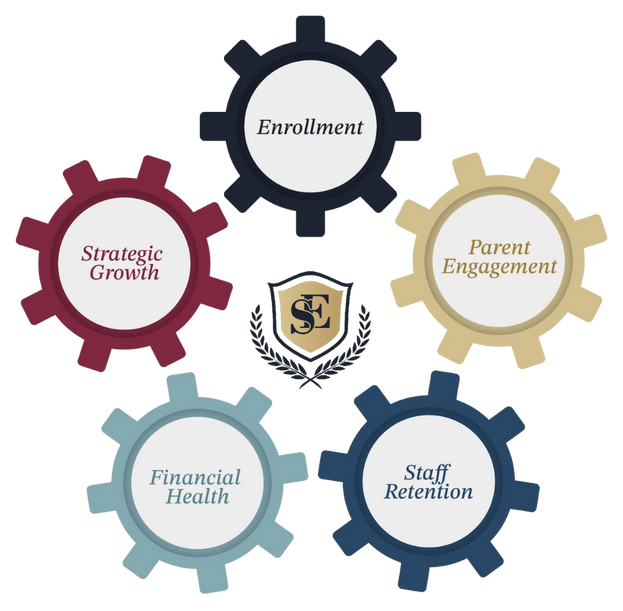
Discover your school's hidden breaking points
Stop Guessing & Start Knowing
with The 5 Gears Diagnostic
What to Do When You Drop the Rhythm
When you miss a beat — and you will — the goal is not to spiral into a story about who you are as a leader. The goal is to return.
Think of it this way: when something breaks in a rhythm, that’s data. Something needs adjusting. Something needs a guardrail. Something needs a little more support in that area.
And when you model return — when you come back to the rhythm without shame, when you repair without drama — you give your team permission to do the same. You create a culture where dropping the ball isn’t a verdict on your character. It’s a signal to pay attention and adjust.
That’s what repair rhythms look like in practice. Not perfection. Return.
The Leader Your School Actually Needs
Your team doesn’t need your intensity. They need your steadiness.
They need to know you’ll be there tomorrow, and the day after that. They need to know the walkthrough is coming, the check-in is happening, and the gratitude is real — not mood-based, not tied to whether it’s been a good week.
Consistency isn’t about never missing a beat. It’s about building rhythms strong enough to hold you — and your school — even on the hard days.
And the quiet courage it takes to stay steady? That’s not a small thing. That’s leadership.
Ready to Build Rhythms That Hold?
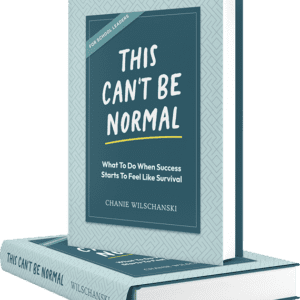
If this resonated with you — if you recognized yourself in the sprint-and-collapse pattern, in the quiet ache of doing the work without seeing results yet, in the question of who you are when you’re not needed — there’s more waiting for you inside This Can’t Be Normal by Chanie Wilschanski.
This isn’t a book about doing more. It’s about learning to lead in a way that holds real life — the misbeats, the returns, the ordinary rhythms that quietly change everything. Available wherever books are sold.
About Chanie Wilschanski & Schools of Excellence
Chanie Wilschanski is the founder of Schools of Excellence and a sought-after mentor for early childhood and private school leaders. Her work is grounded in building operational systems, emotionally intelligent leadership, and sustainable rhythms for long-term success. Through her podcast, trainings, and membership program, Chanie helps private school and ECE leaders lead with confidence, build high-functioning teams, and step into their full leadership potential—without burnout or chaos.
If this episode resonated with you, share it with another school leader ready to move beyond survival mode and into intentional, systems-driven leadership.